Staircase access problems in Rainham flats? Solutions
Posted on 18/06/2026
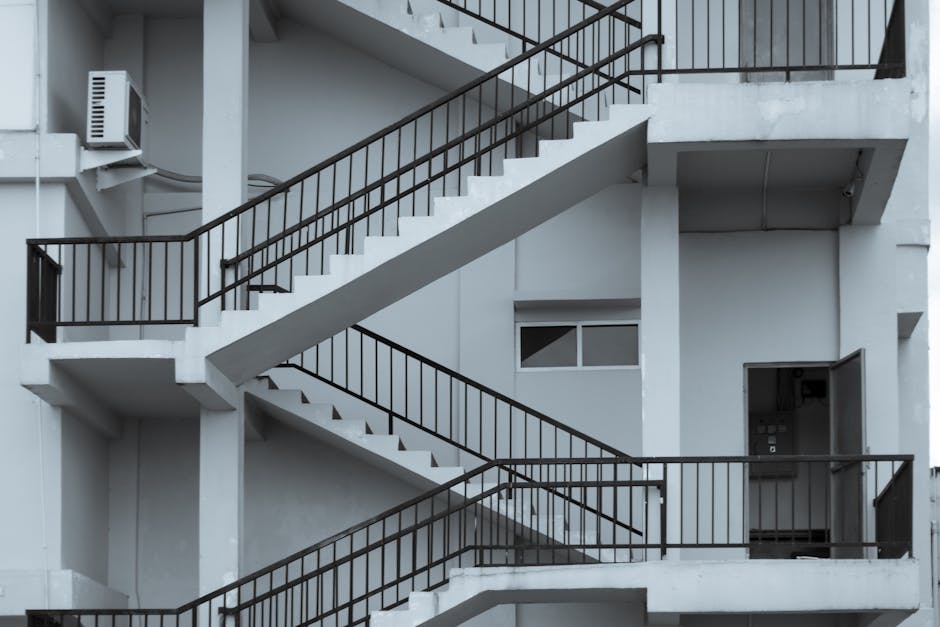
If you live in a Rainham flat and the staircase feels more like a narrow obstacle course than a route out the door, you are definitely not alone. Staircase access problems in Rainham flats can turn a simple move into a stressful one very quickly: tight turns, awkward landings, low ceilings, shared corridors, and heavy furniture that suddenly seems twice its size. The good news? There are sensible solutions. With the right preparation, the right equipment, and a realistic moving plan, even tricky access can be managed calmly and safely.
This guide breaks down the problem in plain English. We will look at what usually goes wrong, why it matters, how professionals approach it, and which practical options make the biggest difference. You will also find a checklist, a comparison table, and a few hard-earned tips that can save time, money, and a lot of backache. Let's face it, nobody wants to discover on moving day that the sofa simply will not turn the corner.
Why Staircase access problems in Rainham flats? Solutions Matters
Staircase access is one of those things people often underestimate until they are standing in the hallway with a bed frame that will not budge. In Rainham flats, access issues can crop up for all sorts of ordinary reasons: older stairwells, compact layouts, tight bends, shared entrances, railings that get in the way, and neighbours who understandably do not want the communal area blocked for long. When access is poor, the risk is not just inconvenience. It can affect safety, timing, property protection, and even the overall cost of a move.
For tenants, landlords, students, and families alike, poor staircase access can cause scratched walls, damaged handrails, strained muscles, and unnecessary delays. If you are moving a heavy wardrobe, white goods, or a bulky sofa, the stairwell becomes the critical bottleneck. That is why planning matters. Good access planning is not about being overcautious. It is about reducing avoidable friction before it starts.
There is also a wider practical point here. Flat moves in Rainham often involve shared spaces, parking limits, and time-sensitive arrangements. So when access is tight, the moving team needs to work in a more controlled way. A bit of forethought makes the whole day feel less like guesswork and more like a proper plan.
Useful takeaway: if a piece of furniture is awkward in your own hallway, it will almost certainly feel worse on a stairwell with a landing and a bend.
How Staircase access problems in Rainham flats? Solutions Works
The solution usually starts with assessment. Not a dramatic survey, just a careful look at what is actually there. How wide is the stairwell? Are there turns at the half-landing? Is the bannister fixed or removable? Are there low ceilings, light fittings, or narrow front doors? These details matter because moving is often less about raw strength and more about geometry. One inch can decide whether a sofa goes up smoothly or gets stuck with everybody pretending not to panic.
Once the access is understood, the next step is choosing the right method. For some flats, careful manual carrying with proper lifting technique is enough. For others, smaller loads, disassembly, or a two-person carry will be safer. In more difficult cases, specialist handling, additional movers, or temporary storage may be the best answer. Sometimes the best solution is simply to move the item in a different form, or at a different time of day, when the building is quieter.
The real trick is matching the item to the route. A mattress might be easy enough with a good turning strategy. A wardrobe, on the other hand, may need to be dismantled first. If you are deciding how to approach the job, articles like discovering the basics of kinetic lifting and moving your bed and mattress safely can help you think through the lifting side more clearly.
Access planning also includes the route outside the building. If the van cannot park close enough, the stair problem becomes even harder because every extra metre adds fatigue and risk. Rainham's local streets and estate layouts can make that feel more fiddly than people expect, so the move should be planned from pavement to top floor, not just from front door to van.
Key Benefits and Practical Advantages
Getting staircase access right does more than protect your furniture. It changes the entire tone of moving day. Things feel calmer. People move with confidence. You waste less time re-trying the same difficult turn. And, quite frankly, you protect your temper too.
- Less risk of damage: walls, banisters, doors, floors, and furniture all benefit from a clear plan.
- Safer handling: fewer awkward lifts means less strain on backs, knees, fingers, and shoulders.
- Faster move: a route that has been checked in advance usually saves time on the day.
- Better communication: everyone knows what is moving, in what order, and how it will be carried.
- Lower stress: people worry less when there is a practical answer to a difficult staircase.
There is another benefit that gets missed often: better decision-making. Once you know an item is unlikely to fit safely, you can stop arguing with the staircase and start solving the problem properly. That might mean dismantling a bed, arranging short-term storage, or booking a move that includes the right size vehicle and crew. You can also learn from nearby moving situations, such as the advice in a local van checklist for Rainham station moves and van access tips for Wennington Road moves, which are both good reminders that access planning starts before the boxes are lifted.
Who This Is For and When It Makes Sense
This topic matters to a wide group of people, but the priorities are slightly different for each. A student moving out of a second-floor flat will usually want speed and affordability. A family with bulky furniture will be more focused on safety and damage prevention. A landlord or letting agent may want a neat handover with no scuffed walls or delays. Different needs, same staircase problem.
You should pay close attention to access if you are:
- moving into or out of a top-floor flat with narrow stairs
- handling large furniture, appliances, or fragile items
- working with shared entrances or limited communal space
- moving during busy hours when neighbours and foot traffic are higher
- dealing with time limits from a tenancy, completion, or key handover
It also makes sense to plan early if the flat has older features or awkward dimensions. In many Rainham flats, the actual issue is not the stair itself but the sequence of obstacles: the front path, then the doorway, then the stairwell, then the landing. By the time you reach the second turn, a piece of furniture may need to be tilted, rotated, and lifted at the same moment. Easy? Not always. Manageable? Usually, yes.
If your move is part of a larger flat relocation, it can help to review flat removal options in Rainham and furniture removals support in Rainham so you can match the scale of the service to the access challenge.
Step-by-Step Guidance
If you want a straightforward way to tackle staircase access problems, use this sequence. It is not flashy. It just works.
- Measure the problem properly. Check stair width, landing depth, ceiling height, and door openings. Note any bends or pinch points.
- List the awkward items first. Sofas, beds, wardrobes, fridge-freezers, and desks usually create the biggest issues.
- Decide what can be dismantled. Remove legs, headboards, shelves, mirrors, and loose parts where safe to do so.
- Protect the route. Use covers for floors and edges, and keep the communal area clear.
- Match the crew to the load. Some items need two people. Some need specialist handling. Be honest about that.
- Use the right order. Move the easiest items first, then the awkward ones, while everyone is still fresh.
- Build in a fallback plan. If an item will not fit, know whether it will be stored, dismantled further, or moved another way.
A small example: if a wardrobe base is too wide for the landing but the structure can be safely separated, a bit of disassembly may save the entire move. If not, forcing it is a mistake. There is no medal for wrestling a wardrobe up a stairwell at a funny angle. Really there isn't.
For packing around difficult access, packing smart for a smooth move can help you reduce box count and make the load more manageable. And if you are still deciding whether to declutter before the move, this step-by-step decluttering guide can save you from carrying unnecessary clutter up and down stairs.
Expert Tips for Better Results
Here are the little things that tend to make a big difference. They are simple, but they are the sort of details that experienced movers pay attention to without making a fuss about it.
- Take photos of the route: a few clear pictures of the stairwell, landing, and awkward corners help with planning.
- Remove trip hazards: shoes, mats, planters, and loose items seem tiny until they become a stumble point.
- Use proper lifting technique: keep loads close, bend the knees, and avoid twisting under pressure.
- Protect corners early: if the item is broad or heavy, fit protection before the move starts.
- Label disassembled parts: a bag of bolts without labels becomes a headache later on.
- Plan for fatigue: stairs wear people out, especially when the weather is warm or the item is heavy.
To be fair, sometimes the best tip is simply this: do less on the day. Fewer unnecessary boxes, fewer loose bits, fewer surprises. If you can trim the workload before moving day, the staircase becomes less of a battle. For people who like a more hands-on approach, lifting heavy objects safely on your own is a useful read, though in practice it is often better not to go solo with anything bulky on stairs.
For awkward items like sofas and mattresses, the right preparation matters just as much as the actual lift. You may also want to look at sofa preservation and storage advice if your access issue means the sofa needs to wait, or at safe bed and mattress handling tips if that is the item causing the trouble.

Common Mistakes to Avoid
Most staircase problems become worse because of one of a handful of avoidable mistakes. The good news is that they are all fixable once you know what to look for.
- Guessing the fit: "It should probably go" is not a measurement.
- Leaving access checks until the van arrives: by then, you are already on the clock.
- Ignoring communal rules: if you block shared space without warning, you may upset neighbours and slow the job down.
- Trying to force furniture through: that is how damage happens, both to the item and the building.
- Not planning the order: if the biggest item is tackled first without thought, the team can burn out early.
- Forgetting about parking distance: a short walk with a heavy item can become a long one very quickly.
There is also a subtle mistake people make: underestimating their own energy. Stairs drain you. By the third or fourth trip, a load that felt fine earlier can suddenly feel clumsy. This is one reason many people choose a more supported option when access is awkward, especially in a flat where repeated trips are unavoidable.
If you are trying to avoid costs creeping up because of avoidable access issues, it is worth reading what to check for hidden removals fees in Rainham. It is a very practical reminder that good planning is usually cheaper than last-minute improvising.
Tools, Resources and Recommendations
You do not need a warehouse full of equipment to solve staircase access problems, but the right tools help. A few sensible items can change a difficult move from chaotic to manageable.
- Furniture sliders or blankets: useful for repositioning items without scraping floors.
- Straps or harnesses: helpful for balanced lifting where suitable and properly used.
- Protective covers: keep corners, banisters, and furniture edges safer.
- Basic tools for dismantling: screwdrivers, Allen keys, and bags for fixings.
- Measuring tape: still one of the cheapest and best problem-solvers around.
- Strong boxes and tape: especially if the route is narrow and you need compact loads.
On the planning side, the most useful resource is often a simple written move plan. That might sound old-fashioned, but it keeps everyone on the same page. Write down the awkward items, the order they will move, the access notes, and any special handling needs. Keep it short enough that someone can read it in a minute.
For related preparation, pre-move house cleaning tips can help you leave communal areas tidy, while freezer safeguarding advice during inactivity is handy if appliances need to be unplugged during the move.
Law, Compliance, Standards, or Best Practice
For a flat move, the main legal and practical issues usually relate to safety, access permissions, and property protection rather than anything highly technical. In the UK, movers and property owners are generally expected to act responsibly around shared spaces, avoid preventable damage, and follow building rules where they exist. That includes taking care with communal stairwells, lifts, entryways, and fire routes.
Best practice usually means a few straightforward things: clear communication, sensible manual handling, proper protection for surfaces, and realistic load planning. If a stairwell is too narrow or the item is too heavy for safe carrying, the professional answer is not to bluff through it. It is to change the plan. That may mean dismantling the item, using an alternative route, arranging additional help, or storing the item temporarily until access is possible.
Insurance and safety also matter. If you are using a removals provider, check that they have clear safety processes and appropriate cover for transit and handling. It sounds dry, I know, but this is where a smooth move becomes a protected move. For a fuller picture of working practices and reassurance, you can review health and safety guidance, insurance and safety information, and accessibility details. These pages help set expectations, even if the exact staircase issue is unique to your building.
There is no magic rule that applies to every flat. But there is a very solid principle: if something feels unsafe to carry, it probably needs another plan. Simple as that.
Options, Methods, or Comparison Table
Different access problems call for different solutions. The right choice depends on the item, the building, the time available, and how much disruption you can tolerate.
| Method | Best for | Pros | Limitations |
|---|---|---|---|
| Manual carry with careful planning | Smaller furniture, boxes, light appliances | Simple, cost-effective, flexible | Not ideal for bulky or heavy items |
| Partial dismantling | Wardrobes, beds, desks, shelving | Often solves tight turns and landings | Needs tools and time, parts must be kept safe |
| Two-person or team lifting | Sofas, mattresses, awkward bulky loads | Better control and reduced strain | Still needs enough stair width and planning |
| Temporary storage | Items that will not safely fit now | Removes pressure from the move day | Extra cost and another logistics step |
| Specialist removal support | Very tight staircases, heavy or valuable items | Most controlled and safest option | Usually more expensive than a basic move |
As a rule of thumb, the more awkward the item and route, the more valuable professional support becomes. If you are moving several large pieces, browsing removal services in Rainham or general removals in Rainham can help you decide whether a broader service makes sense.
Case Study or Real-World Example
Here is a realistic scenario. A couple in a Rainham top-floor flat had a two-seater sofa, a bed frame, and a tall chest of drawers to move out on the same morning. The stairwell had a tight bend halfway up, and the landing was smaller than they had expected. At first glance, the sofa looked like the biggest problem. In practice, the bed frame was the easier one because it could be taken apart. The chest of drawers was the troublemaker.
Instead of trying to lift everything at once, they took a slower approach. The movers checked the route before anything was lifted, removed the bed frame hardware, and protected the stair edges. The sofa was moved last, when the team had a better rhythm and the route was clear. One item was briefly held back because it was just too awkward in its assembled state. That piece went into short-term storage and came out later through a more suitable route. Not glamorous, but effective.
The result was no wall damage, no injuries, and far less stress than they expected. The couple said the biggest difference was simply knowing what not to force. That is usually the turning point, to be honest. Once you stop asking the staircase to do the impossible, things get much easier.
This is also where local planning matters. If you know your building is awkward, it can help to compare service styles such as man and van support in Rainham versus a more full-service approach like house removals in Rainham. Sometimes a lighter service is enough. Sometimes it is not. The staircase usually tells you which, if you listen early enough.
Practical Checklist
Use this checklist before moving day. A printed copy on the kitchen counter works surprisingly well.
- Measure stair width, landing size, and any tight corners.
- Check whether large furniture can be dismantled safely.
- Identify the bulkiest items first.
- Confirm parking and walking distance to the entrance.
- Protect walls, banisters, and flooring where needed.
- Keep tools, fixings, and small parts in labelled bags.
- Make sure boxes are not overfilled or too heavy for stairs.
- Plan which items will be moved first and which last.
- Tell neighbours or building management if shared access could be affected.
- Have a fallback plan for anything that will not fit safely.
Quick summary: measure first, dismantle when sensible, protect the route, and never force a load through a staircase that is clearly saying no.
If your access issue is part of a bigger move, you may also want to compare man with a van in Rainham with removal companies in Rainham. The best fit depends on your space, your belongings, and how much help you need on the stairs.
Get a free quote today and see how much you can save.
Conclusion
Staircase access problems in Rainham flats do not have to derail a move. Most of the time, the answer is a mix of honest measurement, sensible preparation, and choosing the right method for the items involved. Sometimes that means dismantling furniture. Sometimes it means changing the order of the move. Sometimes it means asking for more support so the job stays safe and controlled.
The biggest mistake is treating access as an afterthought. Once you deal with it early, the rest of the move gets easier. The boxes move better. The furniture fits better. The whole day feels less tense. And, yes, the staircase stops being the main character for once.
Take your time, plan the route, and give the awkward pieces the respect they deserve. A calm move is still possible, even in a tricky flat. Especially in a tricky flat, actually.